


Who were the first owners of football clubs? A look back at the very early days of football club ownership

In the modern age of the beautiful game, we see many clubs in the professional game owned by millionaires and billionaires from all around the world, but mainly from the United States. But this more global form of football club ownership has grown exponentially since Roman Abramovich’s acquisition of Chelsea in 2003, and prior to this, English clubs were largely owned by British multi-millionaires, but in the very earliest days of organised football, things were very different.
The Early Days
When the Football League was created in 1888, all clubs were set up as ‘members associations’, meaning that they were a collection of their members. In legal terms, these are known as ‘unincorporated associations’.
An unincorporated association is a group of individuals who come together for a common purpose — such as a sports club, charity, society, or community organisation — without forming a separate legal entity through incorporation. The association is typically governed by a constitution or set of rules agreed between its members. The main benefits of this structure are its simplicity, low cost, and flexibility, as it can be created without formal registration requirements or extensive regulation. However, the drawbacks are significant: the association has no separate legal personality, meaning it generally cannot own property, enter contracts, or sue and be sued in its own name, and members or officers may incur personal liability for the organisation’s debts and obligations.
Incorporation
Small Heath FC, now known as Birmingham City, were the first change their model from this to becoming a limited company, when they underwent the process of ‘incorporation’ in 1888. Incorporation is the legal process by which an organisation becomes a separate legal entity, usually by registering with the relevant government authority, such as Companies House in the UK.

This involves submitting constitutional documents, including articles of association, and complying with statutory registration requirements. Once incorporated as a limited company, the organisation gains its own legal personality, meaning it can own property, enter contracts, and sue or be sued in its own name. The principal benefit of incorporation is limited liability, which protects shareholders or members from personal responsibility for the company’s debts beyond their investment. Incorporation can also improve credibility, continuity, and access to funding. However, there are drawbacks, including greater regulation, administrative obligations, filing and accounting requirements, and reduced flexibility compared with unincorporated bodies. Directors also owe formal legal duties to the company and may face liability if they breach those duties.
Why did clubs choose to incorporate?
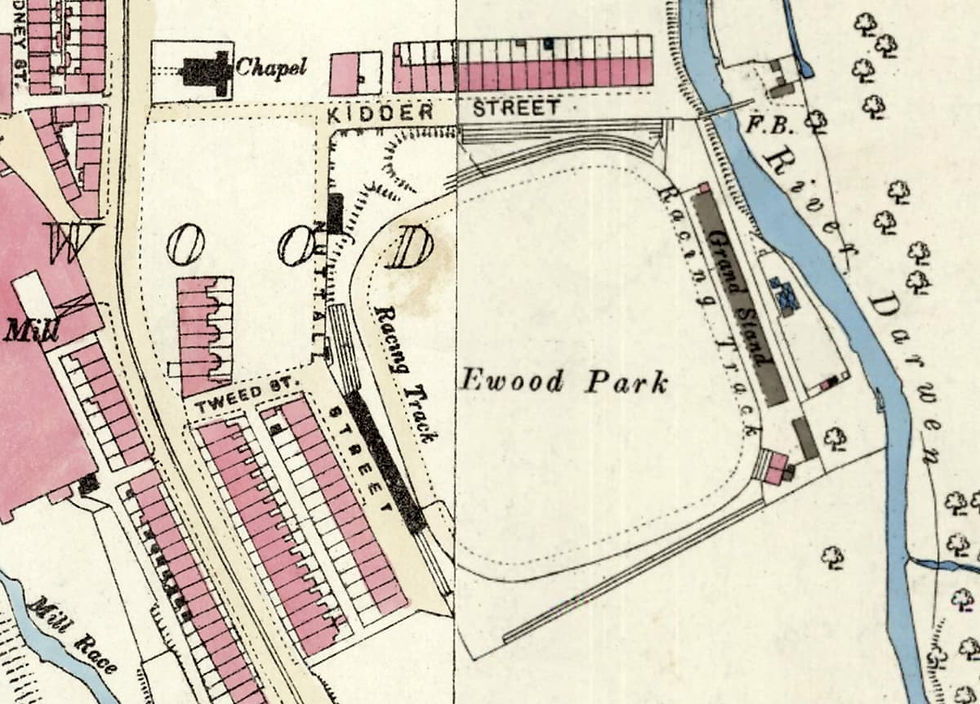
As stated earlier, Small Heath were the first professional football club to incorporate in 1888, but clubs did not immediately follow in their path, with only Liverpool, Gillingham, and Preston North End following suit. The trend only accelerated after the Ewood Park stadium collapse in 1893, where an over capacity stand collapsed during a match and resulted in multiple injuries, but thankfully no fatalities. As a result, senior management at clubs started to realise that they could be personally liable for any damages they would have to pay, as well as for the debts of the club. This spurred many clubs to incorporate in order to protect their senior management from legal liability.
In the 13 years following the Ewood Park stadium collapse, 23 clubs chose to incorporate. By 1939, 71 clubs had incorporated.
The legalisation of professionalism by the Football Association in 1885 was one of the most important factors driving the incorporation of football clubs in the late nineteenth century. Once clubs were permitted to pay players openly, football rapidly became more financially demanding, with clubs needing greater and more reliable sources of income to fund wages, stadium improvements, travel costs, and transfer payments. Professionalism also intensified competition between clubs, particularly in industrial towns where football had become a major form of mass entertainment for working-class communities. As gate receipts increased, clubs required more formal administrative and financial structures to manage growing revenues and liabilities. Incorporation therefore offered a practical solution, allowing clubs to raise capital through share ownership while also limiting the personal financial exposure of those running them. In this sense, the emergence of professionalism transformed football clubs from relatively informal community associations into increasingly sophisticated business organisations, even if their primary aim continued to be sporting success rather than profit maximisation.
Did this change how they behaved?
It would not be unreasonable to expect that this change in legal form, would change the way that clubs operated, with the limited company typically associated with commercial gain and profit maximisation. But fundamentally, this change in legal form did not change how they operated. Clubs did not change their outlook to become more focused on profit over sporting success. In academic terms, this is termed as a ‘utility maximisation’ approach. In a sporting context, utility maximisation refers to the pursuit by individuals or organisations — such as athletes, clubs, or leagues — of the greatest possible satisfaction, success, or benefit from their decisions and activities.
The Football Association (FA) were able to successfully mitigate the more potential capitalistic motivations of owners through the introduction of Rule 34. Introduced in 1899, it restricted football clubs from operating primarily for private profit. It limited shareholder dividends to 5% of the face value of shares and sought to prevent directors from personally benefiting from club assets, such as selling their home stadium for personal profit, reflecting the idea that football clubs should serve their communities and the wider interests of the game rather than commercial investors.
However this did not mean that clubs did not seek to maximise the revenue they could generate, which was then invested back into the team through transfer fees and wages. This was also recognised by the courts. In 1931, a High Court case in the Chancery Division was brought against Newcastle United[1] by shareholders to prevent the club from altering its Articles of Association to allow them to sell food, drink and tobacco, with some shareholders arguing that the changes to the Articles were invalid due to the club not following the stipulated procedures of the Companies Act 1929. The presiding Judge, Mr Justice Eve found against the complainants, with the following passage being illustrative of the times:
“…Football has become a highly organised and heavily capitalised business. The Company has developed in recent years into one of the most prominent football organisations in the this country and the turnover of the Company has increased enormously since its incorporation…”
By and large, Rule 34 was partially successful in limiting the profit motive, particularly during much of the twentieth century when football club ownership was generally viewed as a custodial or community role rather than a commercial investment. By capping dividends and restricting directors from personally profiting from club assets, the rule discouraged speculative investment and limited the financial returns available to shareholders, and ensured that funds stayed within the game as much as possible.
However, its effectiveness declined over time. From the 1970s and especially the 1980s onwards, clubs increasingly adopted complex corporate structures — particularly holding company models — which allowed investors to circumvent the spirit of the rule while technically complying with its wording. Critics argue that the FA failed to update or enforce Rule 34 effectively, and its eventual abandonment paved the way for the commercialisation of English football and the emergence of profit-driven ownership models.
Who were the first owners of clubs?
There have been previous academic analyses of the first owners and shareholders in British football clubs. Most notably, by Wray Vamplew in the 1980’s. The most notable analysis of early share ownership in football was undertaken by Wray Vamplew .
Vamplew examined the question of who the first shareholders were in English and Scottish professional football clubs before 1915, using available incorporation documents to determine the occupations listed alongside census data of the time, thereby ascertaining the social class of those shareholders. Vamplew’s analysis looked at data from 22 Scottish clubs and 33 English clubs, alongside data from 12 Scottish companies connected to other sports, and found a significant difference in the proportion of shares held by individuals considered to fall into the category of working class. In Scotland, he found that 61.7% of individual shareholders were manual workers of some description, whether skilled, semi-skilled or unskilled. In comparison, the same category of workers comprised only 36.8% of individuals who held shares in English clubs.
My own analysis of the very first shareholders in football clubs upon their incorporation as limited companies seeks to build upon Vamplew’s earlier analysis, covering a broader period of 1888 to 1939, and appears to align closely with the perception that the concepts of community and ownership were interlinked. This analysis looked at the incorporation documents of 71 clubs situated in England, Wales, Scotland and Northern Ireland within the Companies House database, and taking the occupations and geographical locations of the 706 shareholders listed on the incorporation documents. In terms of the number of occupations listed, this encompassed 299 different occupations, although a small number of can be considered duplicative. Geographically, an interesting trend is that the overwhelming majority were individuals that appeared to live within the local communities that their clubs operated in.
I found that 76.5% of these individuals were people with working or middle class backgrounds according to their occupations.

These included the likes of James Hobson, a lion tamer, who owned shares in Lisburn Distillery near Belfast in Northern Ireland:

Not to mention Arthur Holt, a band master who owned shares in Morecambe FC in the North West of England:

Not to forget about Samuel Rinder, an Ostrich Feather Manufacturer who owned shares in Bristol Rovers in the South West of England.

Conclusion
While clubs in the modern day game are invariably owned by millionaires and billionaires who often have connections to the financial services industry, or to some other form of manufacture (no complete analysis has been undertaken of this as yet to my knowledge), what this article shows is that in the earliest days of the game, clubs were not just supported by their local communities, they were literally owned by them. The ever escalating financial arms race has severed this ownership link to the community, and even those who are owned by their fans, like AFC Wimbledon, are having to sell off stakes in their clubs to private investors in order to remain competitive.
However, the quest to remain competitive appears to ask one relevant question. Not necessarily how much does it cost? But more like at what cost?


Comments